


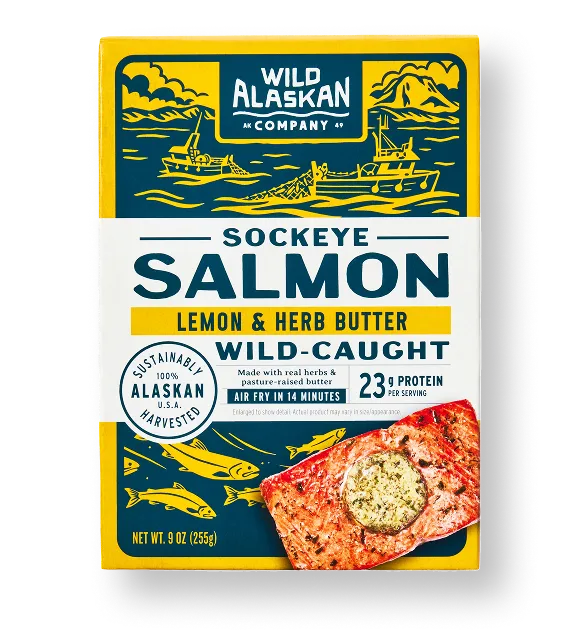
Sockeye Salmon
Lemon & Herb Butter
A timeless pairing done right: flaky sockeye with pasture-raised butter brightened by lemon and herbs. No artificial anything.
Air fry 14 min · 23g protein · 9 oz
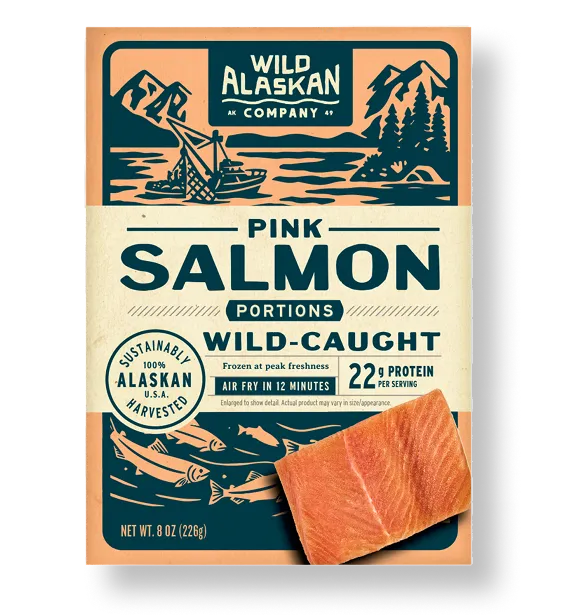
Pink salmon
Portions
Rich in flavor and naturally pink, with a satisfying, tender bite. Portioned for quick, nutritious meals any day of the week.
Air fry 12 min · 22g protein · 8 oz
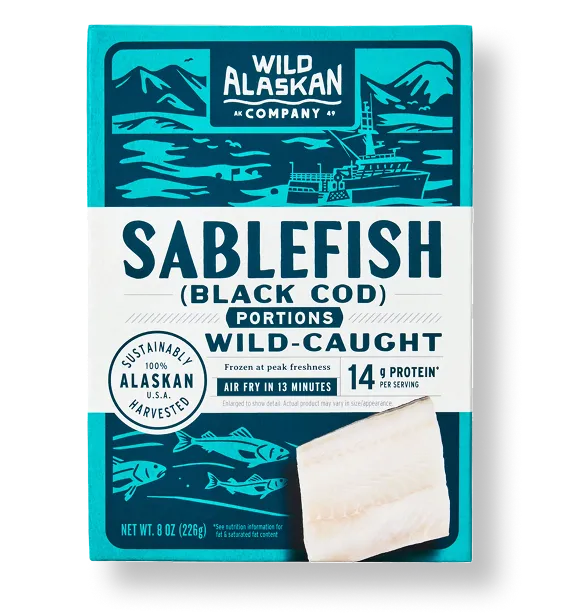
Sablefish (Black Cod)
portions
Silky, buttery, indulgently rich. Natural oils give black cod a melt-in-your-mouth finish that stays tender however you cook it.
Air fry 13 min · 14g protein · 8 oz
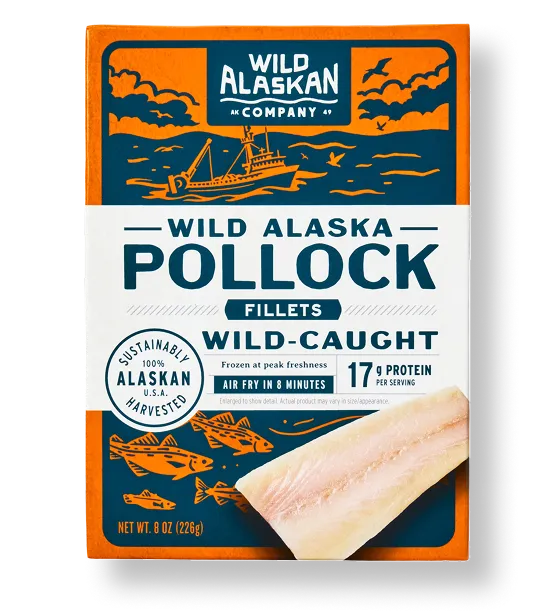
wild alaska pollock
fillets
Light, flaky, melt-in-your-mouth tender, with a clean, subtly sweet flavor that pairs effortlessly with your seasonings.
Air fry 8 min · 17g protein · 8 oz
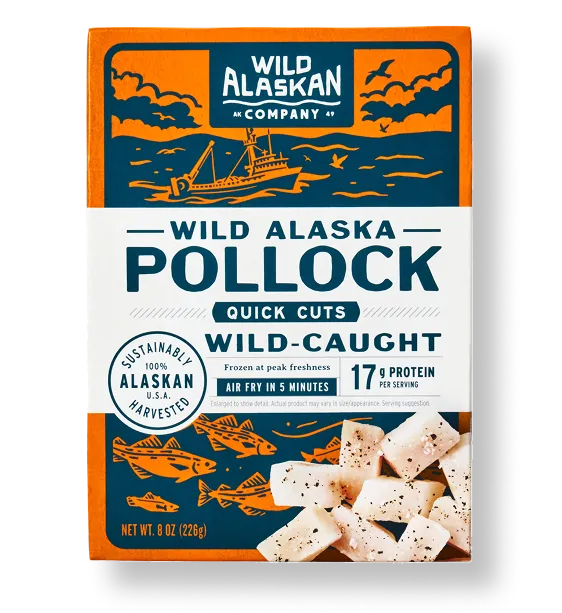
wild alaska pollock
quick cuts
Bite-sized and ready in minutes. Crisp outside, moist inside, naturally lean — great for tacos, soups, and stir-fries.
Air fry 5 min · 17g protein · 8 oz
Store Locator
Alaska is closer than you think

Alaska is the gold standard for fisheries management worldwide. Wild seafood is one of Alaska's most precious resources, and the state is serious about ensuring its continued abundance. Sustainability isn't just a trend, it's the law: Alaska's constitution has required sustainable management for over 60 years, and since 1990 Alaska has banned finfish farming altogether — including salmon — protecting wild stocks and the ecosystems they depend on.
Wild seafood isn't just food — it's a connection to something greater. It comes from living, breathing ecosystems that have nourished life for millennia, not a pen or a tank. Farming practices can have a negative impact on ocean health, but by choosing wild-caught seafood you're supporting fishing communities and animal species that need healthy ecosystems to thrive.
Wild-caught seafood tends to be leaner than its farmed counterparts, so cook times are typically a little faster. When in doubt use a meat thermometer and check your fish early — you can always cook it more, you can't cook it less.
The 100% wild-caught seafood we provide has no added chemicals, preservatives, or antibiotics — just good clean fish.
All of our seafood is sustainably sourced from Alaskan fishing regions, including Bristol Bay — home to the largest sockeye salmon run in the world. Alaska is the only state with sustainable fishing written into its constitution.
Our seafood is frozen at peak freshness shortly after it's caught, which locks in quality better than fish that sits on ice for days before reaching a store.
For best texture, remove from packaging and thaw in the refrigerator overnight. Need it faster? Remove from packaging and place the seafood in a ziploc bag in a bowl of cold water for 20–30 minutes. Avoid thawing at room temperature or in the microwave, which can affect texture and quality.
Stored in your freezer, check the date on your package for specifics. Once thawed, plan to cook it within one to two days and store it in the coldest part of your fridge in the meantime.

